
Preventing Unauthenticated Remote Code Execution In WordPress Core And Plugins
October 17, 2026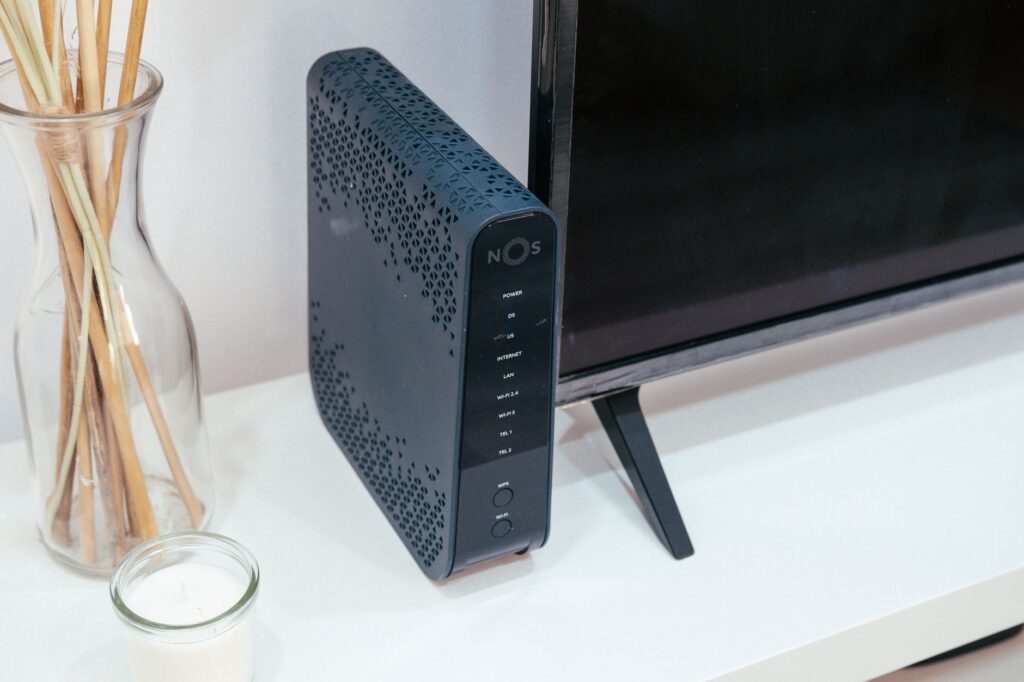
A compromised home router silently routes millions of strangers’ internet traffic through your network — and you have no idea it’s happening. This isn’t a theoretical attack scenario from a security conference whitepaper. It’s the operational reality of proxyware exploitation, a threat vector that has quietly matured into one of the most commercially lucrative and technically elusive forms of infrastructure abuse targeting consumer and IoT devices today. According to a 2025 threat intelligence report by Trend Micro, over 9 million residential IP addresses were actively enrolled in illicit proxy networks without device owners’ knowledge, generating revenue streams exceeding $11 million monthly for operators running the backend infrastructure.
What makes proxyware exploitation particularly dangerous isn’t just its scale — it’s the deliberate design ambiguity that makes attribution and detection genuinely hard. Unlike ransomware or credential stealers, proxyware operates at the intersection of legitimate commercial software and criminal misuse. Understanding how adversaries exploit this gray zone is essential for any security team responsible for protecting network perimeters, endpoint fleets, or distributed IoT infrastructure.
What Is Proxyware and Why Does It Matter Now
Proxyware refers to software — either legitimate residential proxy services or malicious implants — that converts an infected or enrolled device into a network relay. The device’s IP address becomes a conduit for third-party traffic, effectively masking the origin of that traffic behind a residential or corporate IP. Legitimate proxyware platforms like Honeygain, IPRoyal Pawns, and Peer2Profit offer users small monetary compensation for voluntarily sharing bandwidth. The criminal ecosystem mirrors this architecture almost exactly, minus the consent.
The Dual-Use Problem at the Core
The fundamental challenge for defenders is that legitimate and malicious proxyware share nearly identical technical signatures. Both establish persistent background processes, both open outbound TCP connections on non-standard ports, and both route encrypted traffic through the device without generating obvious malicious payloads. Endpoint Detection and Response (EDR) platforms struggle to flag proxyware because the binary behavior — sharing network bandwidth — isn’t inherently malicious in isolation. This dual-use nature means that traditional signature-based detection misses a substantial portion of deployments, particularly on IoT devices where EDR coverage doesn’t exist at all.
Revenue Mechanics Behind Proxy Abuse
Criminal operators monetize hijacked residential IPs through several channels: selling proxy access to ad fraud operations that require human-looking residential traffic, renting IP pools to scraping-as-a-service platforms, and providing anonymization infrastructure for threat actors running credential stuffing campaigns. A single high-quality residential IP in a desirable geography can command $0.50 to $2.00 per gigabyte of routed traffic. Multiply that across millions of compromised devices running continuously, and the economics become immediately clear why this threat category has attracted sophisticated, organized actors.
How Attackers Compromise Consumer Devices for Proxy Deployment
The initial infection vector depends heavily on the target device class. For consumer PCs and mobile devices, proxyware is commonly bundled with pirated software, cracked games, or fraudulent VPN applications. Cisco Talos documented a campaign in early 2026 where a counterfeit “free VPN” application downloaded over 340,000 times silently installed a proxy agent that persisted through reboots using a disguised Windows service entry. Users saw no performance degradation significant enough to trigger suspicion — bandwidth throttling logic in the implant capped usage at 30% of available upstream capacity.
Exploitation Through Vulnerable Application Ecosystems
Beyond bundleware, attackers exploit browser extensions as delivery mechanisms. Malicious extensions, often initially published as legitimate productivity tools before being updated with proxy functionality post-approval, can intercept and reroute browser-level network requests without touching the underlying OS. Google’s Chrome Web Store removed over 760 extensions in Q3 2025 after researchers identified embedded proxyware SDKs. The extensions had accumulated over 87 million collective installs before removal — a scale that underscores how effectively the app store security review process can be bypassed through delayed payload activation.
IoT Devices as High-Value Proxy Infrastructure Targets
Consumer IoT devices represent the most attractive and least defended targets in the proxyware exploitation landscape. Home routers, IP cameras, NAS devices, and smart TVs run persistent operating systems with network access, almost never receive security patches, and operate completely outside the visibility of enterprise security tooling. A compromised SOHO router is architecturally perfect proxyware infrastructure: it handles all network traffic for an entire household, its IP is classified as residential by all major IP reputation databases, and it runs 24/7 without user interaction.
Mirai’s Legacy and the Proxy Pivot
The infrastructure techniques pioneered by the Mirai botnet — exploiting default credentials and unpatched firmware vulnerabilities at scale — have been directly adapted for proxyware deployment. Where Mirai enslaved devices for DDoS amplification, contemporary campaigns like those attributed to the “IPStorm” botnet (dismantled by the FBI in November 2023 but succeeded by variant campaigns) repurposed the same infection methodology to deploy peer-to-peer proxy nodes. The FBI’s IPStorm takedown revealed that the botnet had compromised over 23,000 devices across 30 countries, with victim devices including Raspberry Pi units, Linux servers, Android devices, and MikroTik routers. Operators were generating approximately $550,000 per month selling access to the proxy network.
Firmware-Level Persistence Mechanisms
Advanced threat actors targeting high-value IoT devices have moved beyond process-level implants toward firmware modification techniques that survive factory resets. By modifying the device’s flash memory directly — either through an initial exploit or by uploading a tampered firmware image via an exposed administrative interface — attackers can establish proxyware agents that persist at the bootloader or init system level. VPNFilter, the multi-stage router implant attributed to APT28, demonstrated this capability in 2018 and the technique has since been commoditized. Security researchers at ESET’s IoT research team documented firmware-persistent proxy implants on TP-Link and Asus router models as recently as mid-2026.
Detection Strategies for Enterprise and SOHO Environments
Detection of proxyware requires moving beyond signature-based approaches toward behavioral and network-flow analysis. The primary detection signals are anomalous outbound connection patterns: long-lived TCP sessions to unusual destination IPs, unexpected upload-to-download traffic ratio inversions (proxyware devices often upload far more than they download relative to normal usage), and connections to known proxy service infrastructure endpoints.
Network Flow Analysis as the Primary Detection Surface
For enterprise environments, integrating NetFlow or sFlow data with SIEM correlation rules specifically targeting proxyware behavioral patterns is the most scalable detection approach. Key indicators to flag include: sustained outbound connections on ports 8080, 3128, 1080, or non-standard high ports (49152–65535) to unfamiliar ASNs; traffic volume anomalies where upload exceeds 40% of total traffic on endpoints not running server workloads; and connections maintaining sessions longer than 30 minutes without user activity on the host. Palo Alto Networks’ Unit 42 published a NetFlow-based detection ruleset for proxyware in their 2025 threat research compendium that security teams can adapt for their specific SIEM platforms.
IoT-Specific Monitoring Approaches
For IoT environments where agent-based monitoring is impossible, network segmentation combined with passive traffic inspection provides the primary defensive layer. Placing IoT devices on dedicated VLANs with egress filtering rules that permit only necessary outbound protocols — and generating alerts for any deviation — significantly reduces both the attack surface and detection latency. DNS query monitoring is particularly valuable: proxyware implants commonly resolve domain generation algorithm (DGA) or hard-coded command-and-control domains during initialization. Deploying DNS security filtering and logging at the network perimeter captures this activity even when the device itself is unmonitorable.
Legal, Regulatory, and Compliance Dimensions
The presence of proxyware on enterprise-managed or enterprise-adjacent devices creates compliance risk that extends well beyond operational disruption. When an employee’s compromised laptop routes traffic for criminal proxy operators, that traffic may include communications related to fraud, CSAM distribution, or nation-state intelligence collection. The organization’s IP range becomes associated with that activity in threat intelligence databases, potentially triggering firewall blacklisting, CDN blocks, or regulatory scrutiny.
GDPR, CCPA, and the Data Transit Problem
Under GDPR Article 83 and CCPA Section 1798.150, organizations can face significant liability if compromised devices are demonstrated to have processed third-party personal data without lawful basis — even if the organization was unaware of the compromise. Legal counsel specializing in privacy law increasingly recognizes that proxyware-routed traffic constitutes unauthorized data processing by the organization’s infrastructure. This interpretation, while still evolving in case law, was referenced in a 2025 guidance document from the UK Information Commissioner’s Office discussing organizational accountability for compromised network infrastructure. Compliance officers should ensure that incident response plans explicitly address proxyware scenarios and include mandatory breach notification assessment steps.
Mitigation Frameworks and Remediation Priorities
Effective proxyware mitigation requires a layered approach addressing both prevention and detection across device classes. The NIST Cybersecurity Framework’s “Identify-Protect-Detect-Respond-Recover” model maps well to the proxyware threat, but requires IoT-specific adaptations in the Protect and Detect functions where traditional controls don’t apply.
Prioritized Technical Controls
For enterprise environments, the highest-priority technical controls are: enforcing application allowlisting on endpoints to prevent unauthorized proxy agent installation; deploying DNS-over-HTTPS with filtering to block known proxy service domains; implementing egress firewall policies that require explicit approval for outbound connections to non-business IP ranges; and conducting quarterly firmware integrity checks on all network infrastructure devices. For SOHO and consumer-grade IoT environments, the most impactful single action remains replacing end-of-life devices that no longer receive firmware updates — a category that as of 2026 includes over 60% of deployed home routers according to the Global Cyber Alliance’s router security study. Router replacement combined with disabling remote management interfaces and changing default credentials eliminates the majority of initial compromise vectors.
Incident Response Playbook Elements
When proxyware is detected, remediation must go beyond simply terminating the identified process. Full remediation requires: forensic capture of the implant binary and associated configuration files for intelligence purposes; complete OS reimaging (or firmware reflashing for IoT devices) rather than manual process termination which may miss persistence mechanisms; credential rotation for all accounts accessible from the compromised device; threat hunt across the broader network for lateral implant propagation; and IP reputation remediation by submitting removal requests to major threat intelligence feed operators. Organizations should document the incident thoroughly, as regulatory notification timelines under GDPR (72 hours) begin from the point of confirmed awareness.
Key Takeaways
- Proxyware exploitation is commercially driven at scale: Criminal operators generate multi-million-dollar monthly revenues from hijacked residential and IoT device IP addresses, making this a sustained, well-funded threat category rather than an opportunistic nuisance.
- Detection requires behavioral analysis, not signatures: The dual-use nature of proxyware means signature-based tools miss most deployments. NetFlow anomaly detection, upload/download ratio monitoring, and DNS query analysis are the most effective detection layers.
- IoT devices are structurally ideal targets: The combination of persistent network connectivity, minimal security tooling, and firmware persistence capabilities makes routers, cameras, and NAS devices disproportionately high-value targets for proxy infrastructure abuse.
- Compliance risk is real and underappreciated: Organizations whose infrastructure routes unauthorized third-party traffic may face GDPR or CCPA liability for unauthorized data processing, even without direct knowledge of the compromise.
- Remediation must address persistence layers, not just processes: Terminating a proxy process without full reimaging or firmware reflash typically leaves the device re-infected within hours as persistence mechanisms reactivate.
Conclusion: Building Durable Defenses Against Proxy Infrastructure Abuse
Proxyware exploitation sits at an uncomfortable intersection of legitimate commercial software, criminal monetization infrastructure, and regulatory gray zones — a combination that makes it simultaneously difficult to detect, difficult to attribute, and surprisingly difficult to explain to executive stakeholders who don’t immediately see a “stolen data” narrative. The threat demands serious, structured attention from security teams and the same rigor applied to ransomware or advanced persistent threat campaigns.
Start this week with a concrete audit: pull NetFlow data for the past 30 days and run anomaly detection against upload-to-download ratios across your endpoint fleet. Cross-reference your IoT device inventory against manufacturer end-of-life dates and identify devices overdue for replacement. Review your incident response playbook to confirm it includes proxyware-specific remediation steps and regulatory notification assessment. These actions require no budget approval and no new tooling — just the focused application of existing capabilities to a threat that has likely already touched infrastructure closer to your organization than you realize.
💡 Enjoyed this article?
Subscribe for more expert insights delivered to your inbox.
Follow us or subscribe below xe2x80x94 free, no spam.